Leave Your Message

2026 Best Empty Boxes for Packing for Global Buyers

Global shipping is placing new pressure on a surprisingly basic item: the box. Pitney Bowes reported approximately 161 billion parcels worldwide in 2023. That volume makes packaging choices important for retailers, manufacturers, and everyday exporters. The right Empty Boxes For Packing can reduce product movement, improve stacking, and create a cleaner unboxing experience. The wrong size may add filler, freight weight, and avoidable damage.

Smithers’ packaging research identifies e-commerce as a continuing growth area, with protective formats gaining attention as online orders travel farther. Meanwhile, the International Safe Transit Association stresses practical testing, including vibration, compression, and drop performance. A strong box is not judged by appearance alone. It must survive a warehouse floor, a crowded truck, and a wet doorstep.

Packaging researcher Dr. Jay Singh has said, “A box must protect the product, the people, and the planet.” This principle fits global buyers seeking reliable packing supplies in 2026. Recycled content, recyclable construction, flat-packed storage, and accurate sizing now matter beside price. Still, no single box suits every shipment. That assumption deserves reconsideration.

This guide examines box materials, flute profiles, dimensions, closure styles, and supplier reliability. It also considers practical details, such as whether a box stays rigid around a ceramic mug or collapses beside a metal component. Market data helps, but field experience matters more. Testing a sample before ordering thousands remains the safer decision.

2026 Best Empty Boxes for Packing for Global Buyers

Types of Empty Boxes for Different Global Packing Needs

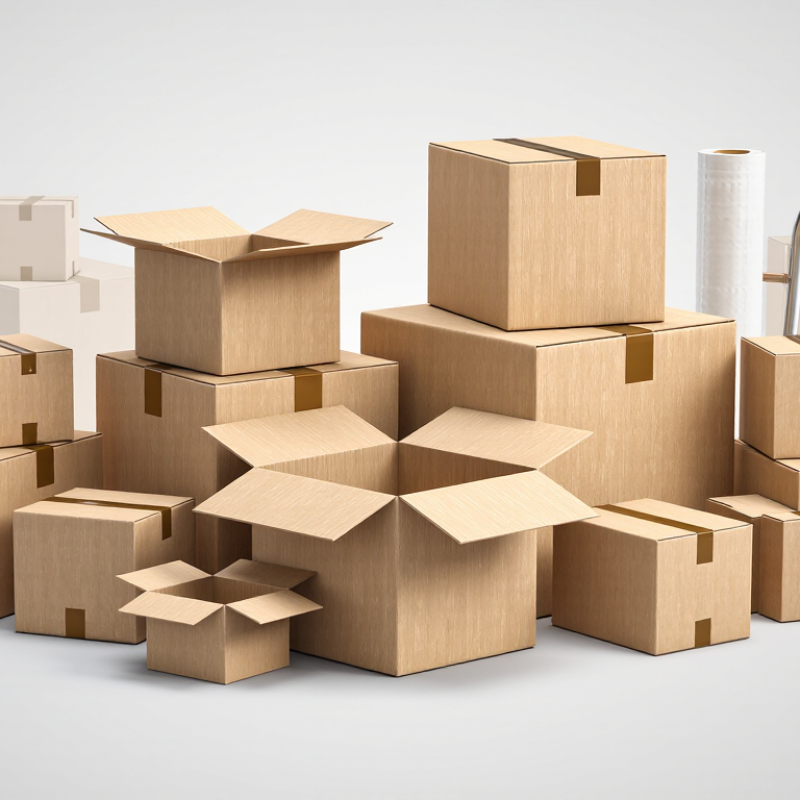
Empty boxes serve different global packing needs, and one shape rarely fits every shipment. Corrugated cartons suit general retail goods, documents, and household items. Double-wall cartons add strength for dense products and longer routes. For lightweight clothing, single-wall boxes often reduce unused space and freight weight. Flat-pack boxes work well for books, samples, and small accessories. Die-cut boxes can improve presentation, but they may cost more and waste more material.

Smithers’ 2024 global corrugated packaging outlook estimates the market will grow from about US$205 billion in 2024 to nearly US$248 billion by 2029. This growth reflects rising e-commerce demand and more shipment protection requirements. For export packing, choose cartons with accurate internal dimensions, strong seams, and moisture-resistant outer paper. A box should leave only a small cushioning gap. Too much empty space invites crushing.

I have seen buyers select oversized cartons because they appear safer. That choice can increase movement, void fill, and transport charges. Not always better. The 2023 World Bank Logistics Performance Index also shows that delivery reliability varies widely between countries, so packaging must tolerate handling delays and repeated transfers. Before purchasing large quantities, test each box with the actual product, cushioning, tape, and stacking pattern. The first design may fail. That is useful information. Record compression damage, corner dents, and closure performance during a small trial shipment.

Key Materials and Construction Features of Quality Packing Boxes

2026 Best Empty Boxes for Packing for Global Buyers
Key Materials and Construction Features of Quality Packing Boxes

Quality packing boxes begin with the right material, not attractive printing. Corrugated fiberboard remains practical for global shipping because its fluted center absorbs shocks. Kraft liners provide a firm outer surface and resist ordinary handling marks. For heavier products, double-wall board offers better stacking strength. However, thicker is not always better. It can increase freight weight and storage costs.

I check box dimensions against the packed product, including protective gaps. A box that is too large allows movement. A tight box may crush at the corners. Edge crush strength, bursting resistance, and moisture tolerance should match the shipping route. Humid ports and sudden temperature changes can weaken paper fibers. Water-based coatings may help, but they cannot repair poor storage conditions.

Construction details often decide performance. Strong corner folds, accurate die-cuts, and clean glued or stitched seams reduce opening failures. Reinforced bottoms support dense contents. Internal dividers prevent glass, metal, or delicate components from striking each other. Molded pulp and paper inserts can replace some plastic protection, though their fit must be tested carefully.

Small flaws matter.

During sample checks, I measure panel alignment and inspect crushed flute edges. I also perform repeated drop and compression tests with realistic weights. No empty box is perfect. A box may pass a factory test yet fail after long warehouse storage. Buyers should request material specifications, test records, and production samples before placing large international orders.

How to Choose the Right Empty Box by Product, Size, and Protection

Choosing an empty box starts with the product, not the catalog. Glassware needs rigid double-wall corrugated board, internal dividers, and minimal movement. Soft garments need less structural strength, but moisture resistance still matters. Smithers’ The Future of Global Packaging to 2028 estimates the global packaging market may reach about US$1.2 trillion by 2028. Scale matters. Suitability matters more.

Measure the packed product, including handles, caps, and protective wrapping. Leave enough space for cushioning, but avoid a large empty cavity. A practical starting point is 25–50 millimeters around fragile items, then adjust after drop testing. Choose cushioning by risk: paper pads for light scuffs, molded pulp for shape control, and foam when impact energy is high. Humidity changes board performance. Ask for edge crush and burst-test results, not vague strength claims. ISTA 3A testing can help simulate parcel handling, although laboratory results never perfectly copy every route.

Box size also affects material use and shipping efficiency. The U.S. Environmental Protection Agency reported 82.2 million tons of containers and packaging in municipal solid waste in 2018, representing 28.1% of the total. That figure is U.S.-based, but it deserves attention from global buyers. A smaller, well-fitted box can reduce void fill and pallet waste. Not always. I have seen teams overprotect low-risk products and underprotect heavy corners. Recheck the design after real transit, especially across humid ports, repeated handling, and uneven warehouse stacking.

2026 Best Empty Boxes for Packing for Global Buyers

How to choose the right empty box by product, size, and protection

The chart compares practical reference box sizes for common product categories. Box volume is calculated from the listed internal dimensions, while the recommended protection level reflects typical packaging needs: light cushioning for soft goods, medium cushioning for general merchandise, and higher cushioning for fragile or impact-sensitive products. Confirm the final dimensions after measuring the product and adding the required cushioning clearance.

Global Shipping Standards, Labeling, and Sustainability Considerations

For global buyers, empty packing boxes should match recognized shipping practices, not just look sturdy. Corrugated board with tested edge-crush strength can better withstand stacking, vibration, and damp transfer points. Box dimensions should leave little unused space, while still allowing protective cushioning. A box that survived our warehouse trial still weakened after overnight exposure to humidity. That result changed our buying checklist.

International labels need clear handling information. Use readable weight, dimensions, carton numbers, and consignee details. Add standardized handling symbols, such as “Keep Dry” and orientation arrows, when the contents require them. Labels should remain visible after strapping or pallet wrapping. Customs documents must match the shipment exactly, including product descriptions and declared values. Requirements differ by destination, so buyers should confirm current rules with carriers and customs authorities. Guessing is expensive.

Sustainability requires more than choosing recycled cardboard. Look for appropriate recycled content, responsible fiber sourcing, water-based printing, and minimal adhesive or plastic film. Avoid oversized cartons; extra air increases freight emissions and reduces pallet efficiency. A single-material box is usually easier to recycle than a laminated design. However, very light packaging may fail and create returns, replacements, and waste. I still find this balance difficult. The greenest option is often the box that protects the shipment successfully on its first journey.

How to Compare Suppliers, Costs, and Customization Options in 2026

Global buyers need more than the lowest empty-box price in 2026. Box strength, freight efficiency, and customization affect the final result. The U.S. Census Bureau reported 2024 e-commerce sales of about $1.1926 trillion, representing 16.1% of total retail sales. Eurostat also reported that 77% of EU internet users purchased goods or services online in 2024. Higher online demand increases pressure on packaging performance and delivery costs.

Compare suppliers using the same specification sheet. List internal dimensions, board grade, compression strength, print coverage, minimum order quantity, lead time, and trade terms. Request a physical sample. Test it with your actual product, tape, and stacking pattern. Smithers’ report, The Future of E-Commerce Packaging to 2028, identifies right-sizing and protective efficiency as important market directions. A smaller box may reduce void fill and shipping volume, but a weak box can create expensive returns. A cheap quote can still lose money.

Calculate landed cost, not unit price. Include tooling, proofing, inland transport, ocean or air freight, duties, inspection, and warehouse handling. For customization, compare flexographic printing, digital printing, die-cut windows, inserts, and water-based coatings. Ask for color tolerance and moisture-resistance records. Custom work looks simple. It often is not. I would also question unusually short production promises, especially when the supplier cannot show test data. Mistakes happen, including my own assumptions, so approve a pilot order before committing to large volumes.

2026 Best Empty Boxes for Packing for Global Buyers - How to Compare Suppliers, Costs, and Customization Options in 2026
Box Type Typical External Size Recommended Material Typical Strength Best Use Indicative Unit Cost
at 500 Units
Typical MOQ Customization Options Standard Production Lead Time Freight Efficiency Supplier Evaluation Priority
Regular Slotted Carton 300 × 200 × 150 mm Single-wall corrugated board, kraft outer liner 32 ECT / approximately 175–200 GSM liners General merchandise, spare parts, household goods US$0.45–0.85 300–1,000 units 1–4 color flexographic printing, die-cut handles, tape strip, recycled content 7–15 working days after artwork approval High when shipped flat Board strength, dimensional accuracy, flat-pack compression
Heavy-Duty Double-Wall Carton 500 × 400 × 300 mm Double-wall corrugated board, kraft or test liner 48 ECT / approximately 275–350 GSM combined liners Heavy, fragile, or export shipments requiring extra stacking strength US$2.20–4.80 200–500 units Reinforced corners, moisture-resistant coating, edge-crush testing, custom partitions 10–20 working days after artwork approval Medium ECT or burst rating, box compression test, moisture resistance
Mailer Box 250 × 180 × 80 mm Single-wall E-flute or B-flute corrugated board Light-to-medium duty; commonly 32 ECT equivalent E-commerce orders, subscription products, apparel, accessories US$0.65–1.40 500–2,000 units Self-locking tabs, tear strip, full-color inside/outside print, custom inserts 10–18 working days after artwork approval High Fold accuracy, opening performance, print registration, insert fit
Die-Cut Product Box 220 × 160 × 70 mm E-flute corrugated board or solid bleached paperboard Light-to-medium duty Retail-ready products, gift sets, electronics accessories US$0.80–2.40 500–3,000 units Custom structural design, windows, embossing, matte or gloss coating, foil accents 15–25 working days, including tooling High when packed flat Tooling cost, dieline accuracy, surface finish, color consistency
Archive and Storage Box 400 × 300 × 250 mm Double-wall corrugated board with reinforced base 32–44 ECT depending on load Documents, records, warehouse storage, long-term organization US$1.20–2.80 300–1,000 units Lift-off lid, label panel, hand holes, stacking specification, moisture-resistant liner 7–15 working days after approval Medium Stacking strength, lid fit, panel durability, storage environment suitability
Bottle and Glassware Shipping Box 320 × 240 × 180 mm Double-wall corrugated board with molded or corrugated inserts 44–48 ECT recommended Bottles, jars, glass containers, ceramics, breakable products US$2.50–6.50 200–500 units Cell dividers, suspension inserts, tamper-evident seals, warning print, drop-test validation 12–25 working days Medium to low Drop-test results, insert retention, clearance, vibration protection
Flat-Pack Furniture Carton 1,200 × 600 × 120 mm Double-wall or triple-wall corrugated board 48–71 ECT depending on product weight Furniture panels, long components, flat-packed equipment US$5.50–14.00 100–300 units Edge protectors, foam channels, corner blocks, printed handling marks, strapping support 15–30 working days Low to medium Dimensional stability, compression strength, pallet fit, oversize freight cost
Pallet-Size Export Carton 1,200 × 800 × 800 mm Heavy-duty double-wall or triple-wall corrugated board 48–71 ECT; confirm by product weight and stacking height Bulk export shipments and palletized industrial goods US$12.00–30.00 50–200 units Custom pallet footprint, fumigation-free design, moisture barrier, corner reinforcement, handling marks 15–30 working days High when matched to pallet dimensions Pallet utilization, compression testing, container loading plan, export documentation
Recycled Paperboard Folding Carton 200 × 120 × 60 mm Recycled solid paperboard, commonly 350–600 GSM Light-duty retail packaging Cosmetics, stationery, small consumer products, dry goods US$0.18–0.75 1,000–5,000 units Offset printing, aqueous coating, recycled-content declaration, window patch, barcode panel 15–25 working days, including proofing Very high GSM consistency, folding performance, print quality, recyclability claims
Reusable Plastic Storage Bin 600 × 400 × 320 mm Corrugated polypropylene or recycled polypropylene Reusable; load capacity commonly 15–30 kg depending on design Repeated distribution cycles, damp warehouses, returnable logistics US$8.00–22.00 100–500 units Attached lids, label holders, nesting or stacking features, color coding, RFID-ready areas 20–45 working days Low when empty; high when reused in a closed loop Cycle testing, hinge durability, return logistics, recycled-content verification
Comparison notes: Unit-cost ranges are indicative 2026 planning benchmarks in U.S. dollars for standard quantities and exclude freight, taxes, tooling, inserts, and destination charges. Actual prices vary by board grade, order volume, printing coverage, destination, currency, and Incoterms. ECT values refer to edge-crush performance and should be confirmed through a supplier test report for the intended product weight, stacking height, humidity, and transport route.